From Manual Inspection to Intelligent Collaboration: A New Step in Bogie Quality Management
In the manufacturing and maintenance of railway freight cars, bogie quality has always been the core concern on site.
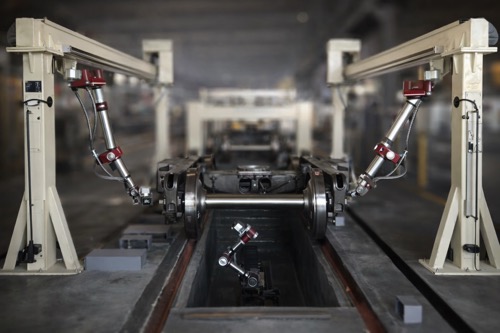
Figure 1 Bogie Intelligent Inspection Site
Traditional inspection methods mainly rely on manual visual inspection, empirical judgment and paper records, and have long faced three major pain points:
1、Limited efficiency – contradiction between inspection speed and quality
2、Difficult to ensure consistency – results easily affected by personnel experience and status
3、Inconvenient traceability – scattered paper records, time-consuming and laborious problem tracing
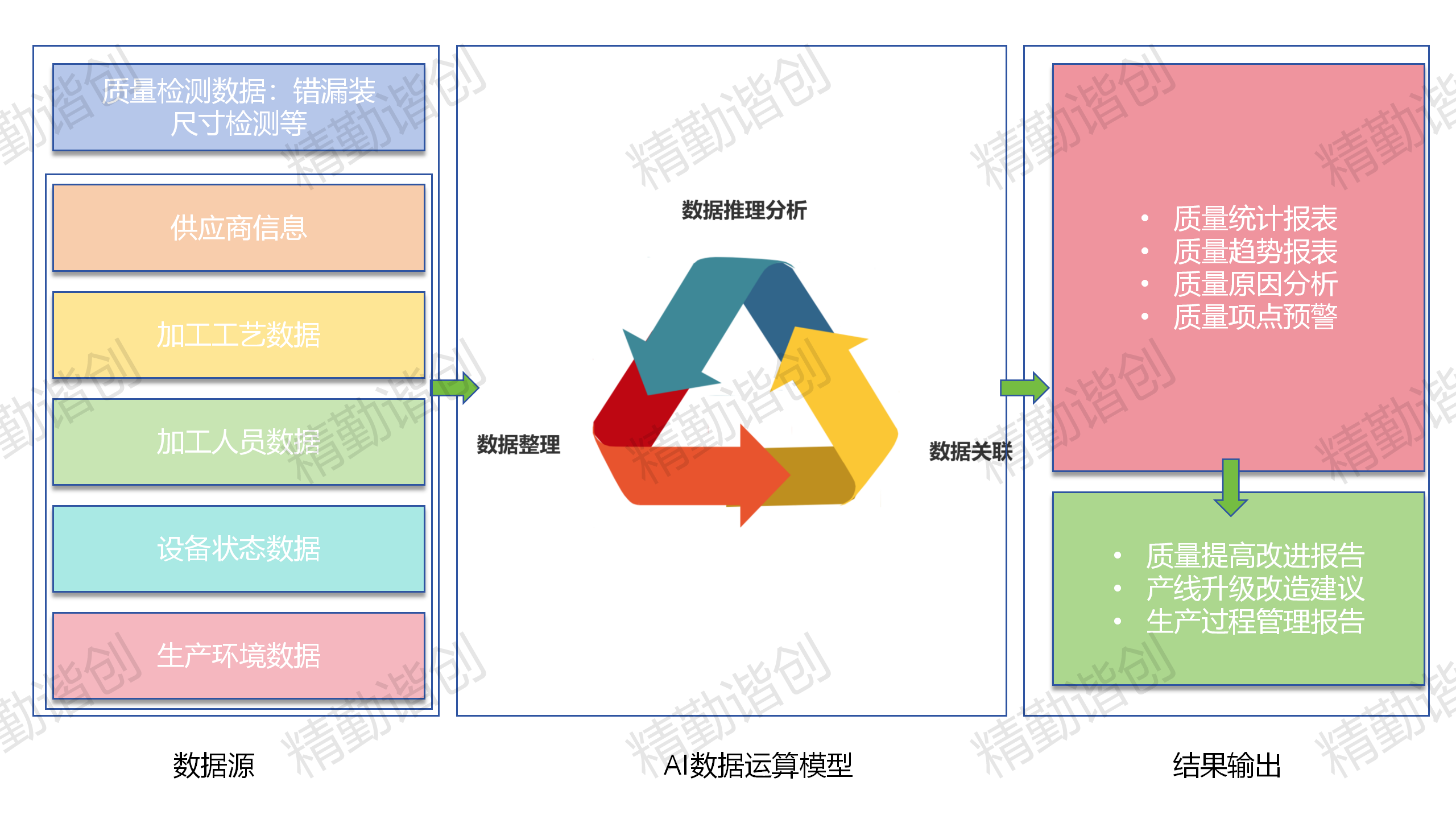
To meet this practical demand, our company has independently developed an intelligent inspection system and quality analysis platform for bogie completion acceptance, realizing integrated applications such as automatic judgment of inspection results, real-time data display, and correlation analysis of quality information.
At present, the project has been successfully implemented in two typical scenarios: CRRC Qiqihar Rolling Stock Works – representing new car manufacturing, successfully implemented and running stably; Wuxi Rolling Stock Depot of Urumqi Railway Bureau – representing maintenance scenario, deployed and put into use.
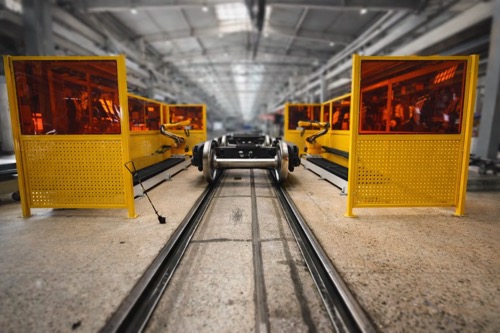
Figure 2 Overall Scene of Bogie Intelligent Inspection Station (Maintenance Scene, Cycle Time Within 3 Minutes)
一、Focusing on Final Delivery Inspection, Improving Testing Efficiency and Consistency
The system meets the key business needs of bogie completion inspection, can automatically identify and assist in judging key on-site inspection items, and comprehensively improve the standardization, intuitiveness and consistency of inspection work.
Core Capabilities:
1、Bogie completion wrong/missing assembly identification
2、Identification information recognition and association
3、Automatic judgment of key dimension inspection
4、Real-time display of inspection results for quick on-site re-inspection
二、Digital Accumulation and Application , From Detected to Utilized
This project not only focuses on 'detection', but also on 'application'.Based on on-site inspection, the platform further conducts unified management and correlation analysis of relevant quality data, and gradually forms data support capabilities for production and maintenance services.
Through continuous accumulation and analysis, the platform can provide a more intuitive basis for quality problem troubleshooting, process improvement and trend judgment, promoting bogie quality management from empirical judgment to data support.
"The project has inspected nearly 4,000 bogies in total, with a daily inspection volume of more than 50 at a single point, stable operation and obvious on-site application effects."
三、Real-time Analysis and Display , Support Quick On-site Re-inspection
An outstanding feature of this project is the realization of real-time display of inspection results and real-time data analysis.During inspection, relevant results are displayed synchronously on the on-site interface. Operators and inspectors can grasp the status, quickly confirm abnormal items, and efficiently conduct on-site re-inspection, forming a closed-loop mechanism of 'inspection-feedback-disposal'.
四、Dual-scenario Verification – Full Implementation in New Car Manufacturing and Maintenance
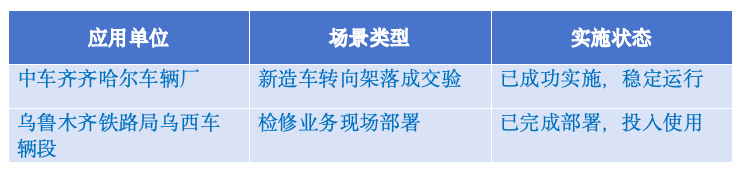
The smooth implementation of the two typical scenarios fully verifies the adaptability and reliability of the solution in different business environments, and lays a solid foundation for subsequent large-scale promotion in the industry.
Conclusion:
From manual inspection to intelligent collaboration, from result recording to data application, railway freight car bogie quality management is moving towards a more efficient, intuitive and traceable new stage.The implementation of this project is not only an optimization of inspection methods, but also a systematic upgrade of on-site quality management mode.
"Make inspection more efficient, data more intuitive, and quality management more proactive"